Showing posts with label Adventure/war. Show all posts

September 18, 2013

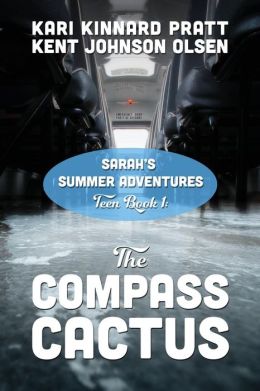
The Compass Cactus, Teen Book #1 - Kari Kinnard Pratt & Kent Johnson Olsen

❖ No comments:

Title: The Compass Cactus
Author: Kari Kinnard Pratt & Kent Johnson Olsen
Publisher: Outskirts Press
Release date: June 2013
Pages: 73

 

* Mr. Blake Eding, Ghost Creek Camp Dam engineer, shook his head in despair. "I hate to lose all this water, but we must release some or the whole dam will go." He flipped a switch titled "Release". Through the control window, he saw water begin pouring from the spillways. *
_________________________________ 

Mr. Turner's sophomore science class is a favorite among his high school students, with lively experiments and funny discussions -and he has made science even more exciting by awarding a seat in the school bus going to the Ghost Creek Camp for anyone who scores 100% on their final exam. Ghost Creek offers ATVs, hiking trails, archery and more -with a competition to win two tickets to any venue, athletic or musical program the winner desires. It's what students work toward all year.
Sarah has earned 100% on her final exam, and she and her friends are packed up and ready for fun! But first they have to survive the flash flood that tips over their school bus... and this is only the beginning of Sarah's summer adventures.


The Compass Cactus is a short book telling the first part of Sarah’s summer adventures. Every year, science teacher Mr. Turner awards a day at the Ghost Creek Day Camp to anyone who scores 100% on their final exam. Students work towards this aim all year long and Sarah is delighted when she is chosen with a few of her friends. But as the weather worsens and flash flood threatens the school bus, they realise that the day will not be as fun as they had expected.
The back cover summary caught my attention straightaway. A young adult book was a nice break in my reading and the story seemed promising. However, I must admit I was disappointed. I would not say I did not enjoy it at all, but I turned the last page being rather frustrated, as it did not live up to my expectations.
First of all, the figures did not convince me. I know it is a young adult novel, but still, their character was not developed enough; therefore, I did not have the feeling I got to know them enough to like them. We have the “goodies” and the “baddies”, two clearly defined groups, and the clichés annoyed me because of the lack of realism. In such a critical situation, I cannot really imagine that anybody could be stupid enough to go on trying to harm someone before even thinking about their own safety. Likewise, the perfect protagonists with leader qualities who could save everybody else got on my nerves rather quickly.
The story focuses mainly on Sarah, but eight other students and the teacher are part of the group as well. I felt that it was too many given that the book only has 73 pages. Some of the characters are only briefly introduced to the reader, but they do not seem to really play a role in the plot. However, keeping in mind that there are two more books to come, they might develop later on. It would be interesting to find out...
I found the idea of the plot itself interesting, although not original. I was thus waiting for a special event, for something that would make it different from anything I had read before, but it never came. It I try to analyse why I was disappointed, I must say it is probably because of the lack of suspense. Indeed, the main problem is that we know most of what is going to happen because of the back cover summary. If it contained less information, I would probably have felt drawn to Sarah’s adventures much more that I actually did and not expected more dramatic events to take place.
The positive points of The Compass Cactus – because there are some as well – are mostly the writing style; it perfectly suits the young adult genre and is easy to read. The organisation of the book in chapters with mention of the day and time is good and the layout pleasant. I also enjoyed the fact that we had various viewpoints as the story went on; briefly meeting the rescue team, the bus driver, Sarah’s parents... is a good way of keeping our interest and involving a little suspense in the plot.
The explanations about flash flood and several other elements about nature and scouting were also interesting, but I would have liked to know more about the context and environment than about the characters’ actions.
The Compass Cactus is not a book that convinced me. I finish it with an aftertaste of unfinished: the plot and the characters are interesting, but I think they need to be developed and improved in order to avoid clichés. The main problem is the back cover summary, which spoils the suspense and actually advertises for the second and third books rather than for the first one. A much younger audience will however probably enjoy reading it – maybe I have just become too old and fussy to enjoy young adult reads!
I thank the authors Kari Kinnard Pratt and Kent Johnson Olsen for providing me with a copy of their book and Bostick Communications for allowing me to discover a wide range of new books. Although my review is not as good as I had expected, I might read the next books if I get chance as I do not like to be left with mixed feelings.

 
Partnership with authors Kari Kinnard Pratt & Kent Johnson Olsen
Organised by Bostick Communication


July 02, 2013

The Book Thief - Markus Zusak

❖ No comments:

Title: The Book Thief
Author: Markus Zusak
Publisher: Black Swan
Release date: 2007
Pages: 554
 

* As Liesel would discover, a good thief requires many things. Stealth. Nerve Speed. More important than any of those things, however, was one final requirement. Luck.*
_________________________________ 

Here is a small fact
You are going to die.
1939. Nazi Germany. The country is holding its breath. Death has never been busier.

 Liesel, a nine-year-old girl, is living with a foster family on Himmel Street. Her parents have been taken away to a concentration camp. Liesel steals books. This is her story and the story of the inhabitants of her street when the bombs begin to fall.
Some important information
This novel is narrated by Death
it's a small story, about:
* a girl *
* an accordionist *
* some fanatical Germans *
* a Jewish fist fighter *
*and quite a lot of thievery *
Another thing you should know
Death will visit the book thief three times.


‘There’s a multitude of stories (a mere handful, as I have previously suggested) that I allow to distract me as I work, just as the colours do. I pick them up in the unluckiest, unluckiest places and I make sure to remember them as I go about my work. The Book Thief is one such story’
And a poignant one. It is Liesel’s story, which starts in 1939 in the German town of Molching. The nine-year-old girl is sent to live there with a foster family and starts her new life on Himmel Street with encounters, friends, football games, school… and thievery, especially book thievery. But war is raging in the country and the rest of the world, and nobody is safe.
Although it might first appear like a rather conventional plot, Liesel’s story is undoubtedly moving. Is it because of the theme, which is at the same time emotional and terrible? Is it because of the touch of humour that characterises the narrator’s voice? Is it because of the poetic style of the considerations on the power of words? Is it because of the agreeable and light writing? Is it because of the characters themselves and their ability to survive even in the most desperate situations? Is it because of the unusual graphic design of the book? It is probably the sum of all these little details that make The Book Thief such an extraordinary and unique novel.
Most readers’ attention will probably first be attracted by the visual aspect of the book. The cover seems to be a good mirror of what will be discovered inside, and so are the back cover and its short summary: something plain, elegant, sad, and yes, intriguing and unusual. There are hundreds of books about the Holocaust, but this one is not like any I have read before.
The story is composed of ten main parts, which are themselves divided into short chapters. Each of them includes comments and precisions given by the narrator, sometimes with lists, bullet points, definitions or even sketches and drawings. The changes in font and style give an extremely attractive appearance to the novel. On the back cover summary, we are already given a good insight of what will be told and why… as well as a useful piece of information about the narrator.
Those who have started the book without reading this extract might wonder who is telling them the story. Who is that strange person who addresses us in a casual way and who is obviously not a human being, although he lives among them? It is nobody else that Death. The idea of choosing such an unconventional narrator was a masterstroke, as it offers various advantages. Of course, he is unusual and for that reason also attractive. Moreover, it enables the author to vary the point of view. Although Liesel’s story and that of her friends, enemies and family is the most important one, the dramatic events that are taking place in the world can simply not be neglected.
Markus Zusak wrote about the Holocaust, but rather than focusing on the camps or on battle scenes, he describes the lives of several rather conventional characters in a small town. He does not try to make us hate Hitler’s supporters or commiserate with the Jews. He describes the events and the characters and the reader is left to make up his own opinion. We can easily imagine that hundreds of other families had the same daily routine as the inhabitants of Himmel Street. Some were on the Führer’s side, others helped Jews… what is sure is that war had an important impact for all of them, even the ones who did not want to be involved, even the elderly people and the children… like Liesel.
Casting Death as the narrator enables shifts between global events and the particular situation of Molching, as well as an insight into various people’s lives, which would not have been the case if Liesel was telling the story on her own. Also, the time of the story is not linear: we have many flashbacks and shifts in the future, which captivate the reader’s interest from the first word to the last. Although we are given clues about event that are to take place later on, the suspense is kept all the way and we are always waiting for one more twists and turns in the plot.
Markus Zusak’s writing style is light and easy to read. We have the feeling that we are addressed directly and thus really involved in the story. The presence of several German words or sentences – and their translation, added in a simple and natural way, for those who do not understand this language – give a local taste to the description and take us straight to Himmel Street in the 40s. You do not read the story: you live it.
Several passages are moving and some contain a touch of humour which is welcome or even indispensable when you explore such a serious theme. The author uses a wide range of extremely meaningful images and metaphors, which successfully add to the depth of the story. The colours are important for Death, as you will discover in the first pages. The power of words is analysed by Liesel in a beautiful way as the story unfolds and will probably leave more than one reader with pensive thoughts.
The characters are all detailed and well developed. Liesel is clearly the heroin, but each of the characters she encounters has got enough space for his own personality to evolve and for the reader to grow attached to him: Hans and Rosa Hubermann, Rudy, Ilsa Hermann, Frau Holzstapel, Max Vandernburg… In my opinion, The Book Thief illustrates in an accurate way what happens at war. In a single town, on a single street, you will find a mix of people: soldiers, fanatics, neutral people who do not want to take sides, hidden Jews… and so do unexpected and unbelievable relationships form and develop. In a hostile universe, people have no choice but cooperate and trust one another… or at least try to. This is what wonderful stories are often made of.
The Book Thief is no fairy tale – although you will find at least one among its pages – and it does not finish with a ‘happy end’. The last chapters are tragic but nonetheless magnificent. Despite my great sadness when I discovered what happened to Himmel Street and its inhabitants, I must admit that this ending perfectly matches the tone of the story. Most readers will probably find themselves with tears rolling down their cheeks as the inevitable happens… and after more than 500 pages, they will be wondering how he reached the end of the story without even noticing it.
A wonderful, poignant novel which is unique in its genre despite the popular theme it deals with. A heart-warming Holocaust fiction like you have never read before!
_________________________________

Thank you so much Mum for lending me this wonderful book. It is probably one of the best ones I have ever read!


July 01, 2013

Toro! Toro! - Michael Morpurgo

❖ No comments:

Title: Toro! Toro!
Author: Michael Morpurgo
Publisher: Harper Collins (Children's Books)
Release date: 2001
Pages: 127
 

*'It is all about freedom,' he said quietly. 'A man without freedom is a man without honour, without dignity, without nobility. If they come, I will fight for the right of the poor people of Andalucia to have enough food in their bellies, and I will fight for our right to think as we wish and say what we wish.'*
_________________________________ 

Antonito lives an idyllic life on his parents’ bull farm in Spain. But the idyll is shattered when he realises that his calf, Paco, is destined for the bullring. What can he do? He has a daring plan, but it will take enormous courage to see it through – because it is 1936, and the drums of war are echoing across the Spanish plains…
___________________________ 

*If I learned one thing on that last journey, and while hiding in the hills with the refugees, it was that men and women have a capacity for kindness as great if not greater that their capacity for evil.*


Stories about animals, stories about war, stories about important historical events… Three areas in which Michael Morpurgo is brilliant at. Toro! Toro! is another of his children’s novel, and one that is as moving and meaningful as many others.
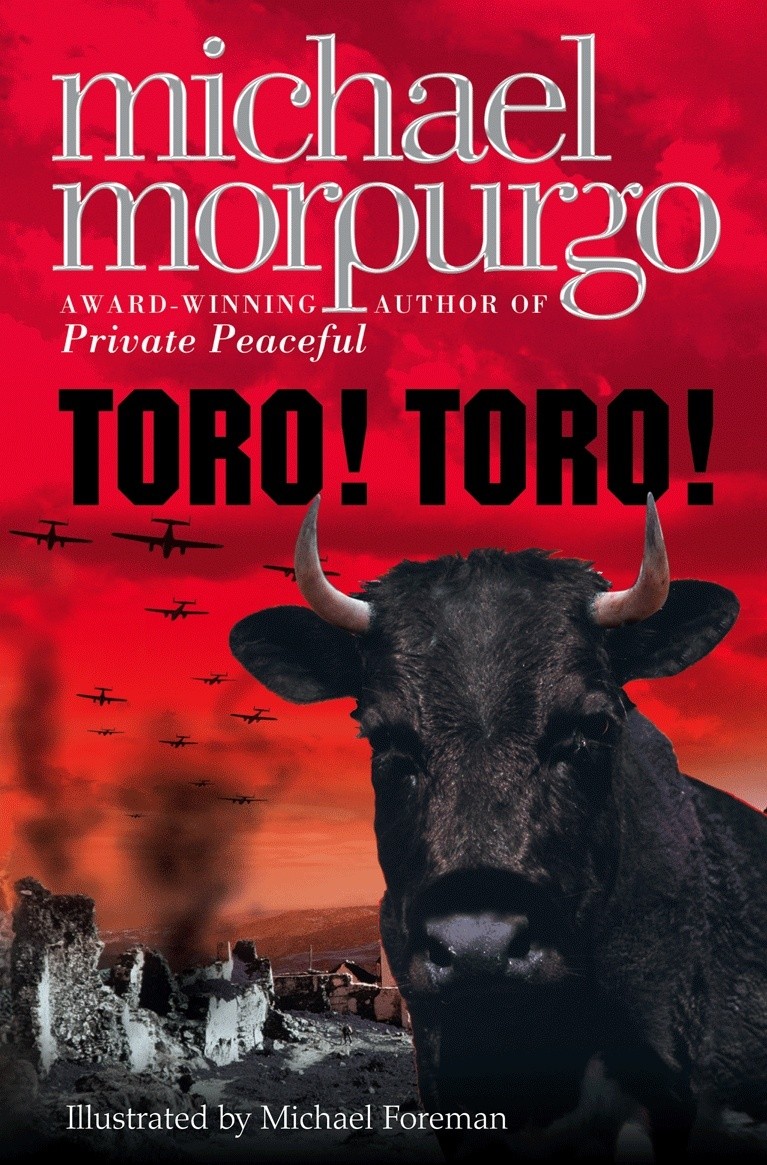
With the title and the front cover already, the reader knows what the main themes will be: bulls, as said in the title, and war, as demonstrated by the aeroplanes and the ruins showed on the picture. We also understand that the story takes place in Spain, and although the front cover suggests the terrible events we are about to discover, everything starts quietly. Antonito live on a bull farm, where he helps his father look after a calf whose mother died, Paco. But when he discovers that his Paco is being prepared for the bullring, he makes the decision to save him, no matter the danger caused by the raising civil war.
By focusing the story on a child, an animal, and their extraordinary relationship, the author uses the same scheme as some of his previous books, such as War Horse and Shadow, but he knows how to bring in events that will make Toro! Toro! different and attractive to a young audience.
We are first drawn into Spanish culture, with bull fights and corrida. We get to know Antonito with enough details but not too many, in order not to distract the children. The reader will discover how the bull fights are organised at the same time as little Antonito, with descriptions and information to understand them properly.
We then understand the danger for Paco, but like Antonito, we forget another, greater danger: war. Here again, we are not given a whole lot of complicated details, but only just what is necessary for the young readers to understand what the civil war is about, who Franco is, and what is happening to Antonito’s village.
Antonito’s story is actually told by himself, but years later, when he is a grandfather. This 'story in a story' is a good point of view, as it allows a more adult glance than if it had only been little Antonito telling what happened. Also, it is probably a good book to read as a bedtime story, because the children will feel they are addressed to directly.
With Toro! Toro! Michael Morpurgo once more shows his talent for telling children stories. He gives them a good insight of important historical events without too much violence, with moving characters. The animals also add to the depth of the story, as does the unknown Spanish environment and culture. The pictures, designed by Michael Foreman, are simple and beautiful, and so is the writing style, which will probably arouse children’s attention from the age of five.


Between Shades of Gray - Ruta Sepetys

❖ No comments:

Title: Between Shades of Gray
Author: Ruta Sepetys
Publisher: Penguin Books
Release date: 2011
Pages: 344
 

* I shut the bathroom door and caught sight of my face in the mirror. I had no idea how quickly it was to change, to fade. If I had, I would have stared at my reflection, memorizing it. It was the last time I would look into a real mirror for more than a decade. *
_________________________________ 

Lina is just an ordinary, youg Lithuanian girl. She paints, she draws, she gets crushes on boys. Until the night in 1941 when Soviet guards haul Lina and her family from their home. Separated from her father and forced into a cattle car, Lina, her mother and her young brother begin a harrowing journey north, across the Arctic Circle, to a work camp in the frozen wastes of Siberia.
There they are forced, under Stalin's orders, to struggle for their lives under the cruellest of conditions. Lina's only solace is her art. At great risk, she draws, recording the beauty and the horror and even the ordinariness that she sees every day, hoping that one day her father, wherever he may be, might look upon her work.
Until that day Lina must wait, draw and try to survive...

___________________________ 

* Exactly a year before, the Soviets have begun moving troops over the borders into the country. Then, in August, Lithuania was officially annexed into the Soviet Union. When I complained at the dinner table, Papa yelled at me and told me to never, ever say anything derogatory about the Soviets. He sent me to my room. I didn’t say anything out loud after that. But I thought about it a lot. *


Given the reaction of most people I talked to about this book, I would like to clarify something before I start. This review is not going to be about an erotic novel. It is not going to be about Anastasia and Christian’s relationship. It is not going to be about El James’ Fifty shades of grey. No, Between shades of gray has got nothing to do with the fast-selling novel everybody seems to be talking about, it is a completely different book, although there are similarities in the titles.
The story is that of Lina, a young Lithuanian girl who is deported one night in 1941 with her mother and brother. Her father has been arrested as well, but she does not know where he is. A horrible journey starts for them and for many other Lithuanians, from cattle cars to labour camps. Lina must fight to survive every day in these harsh conditions, with no food and constant fear of the NKVD police. But she wants to see her home again, and her father. So despite the risk, she draws and writes, hoping her art will save them.
The theme chosen by Ruta Sepetys is grim: deportation. Too often, we forget that other countries than Western European ones have been affected by war in a dramatic way. It is the case of Lithuania, torn between Russia and Germany. The war was the opportunity for the secret police working under Stalin'orders to remove anybody considered as dangerous for their government. So in a few days only, thousands of people were deported and nobody reacted. The horror began for many Lithuanians, Estonians, Latvians and Finns, whose families were torn apart, who were sent to prison or to labour camps, killed…
In this historical background, we get to know Lina and her family. Lina is only fifteen and is like any girl of her age… until she is dragged by the secret police and sent to Siberia. What did she do to deserve such inhuman treatment? Like many others, nothing, but she is considered to be a threat for the government and so she need to disappear.
The scenes describing the behaviour of the secret police and the horrors lived by the prisoners are rather violent. Full of details, nothing is hidden or weakened. More than once, I could actually feel the characters’ fear in front of the guards. However, in my opinion, Between shades of gray is a message of hope and love and not only a dark novel about the horrors of deportation.
Lina is a moving character and I grew attached to her in the first few pages already. I liked the fact that she is an ordinary girl, apart from her gift for drawing. However, we will quickly understand that she is also extremely strong and that only by remaining herself she can hope to survive. The other characters are also well portrayed, particularly her brother and mother but also the people forced to share the cattle car with them and later on work on the labour camp.
Although it is fiction, we can see that Ruta Sepetys did a great job of research about Lithuania, Siberia, labour camps and deportation. The feelings described are extremely moving and seemed very realistic to me. How can we not be moved by such horrors? And how can we not admire the courage showed by these people? I tried to imagine how I would react if I were in their situation but try as I might, I couldn’t. What is amazing is the ways they find to survive, to keep a glimmer of hope and try and be happy. Of course, they cannot find happiness in this case, but their memories and the way they help each other is extraordinary.
Mixed with the main story, we have various flashbacks which I particularly enjoy for two reasons. First of all, they show a great contrast between how Lithuania was and the present of the story. We see Lina’s happy childhood, her teenager’s concerns and her dreams. And we understand how, in one night, everything can change. The second reason is connected to the point of view in which the story is told. Lina is giving an account of what happens and as she is a young girl, she does not understand everything about politics. Also, there are secrets kept from her in order to protect her. The flashbacks are useful because they enable us to discover the situation little by little, at the same time as Lina.
The writing style also matches the point of view: it is simple, without too many details, just like a teenager’s diary. Yet, it is extremely agreeable to read and you will not even notice as you go through the pages. Drawn by Lina’s desire to live and by her dreams, you will discover how the story unfolds for her and her family. But is there really an end to such horrors?
Between shades of gray is a novel full of emotion. Although it is fiction, it gives us a good insight into the situation of Lithuania during WWII and into deportation. The characters are full of personality and their kindness can only be admired. They dream, they fight, they hope for their life to become normal again. But is it possible after such horrors? And is it possible to survive in such hostile environment? This book made me realise more than ever before how lucky I was to be born in a safe country and era.


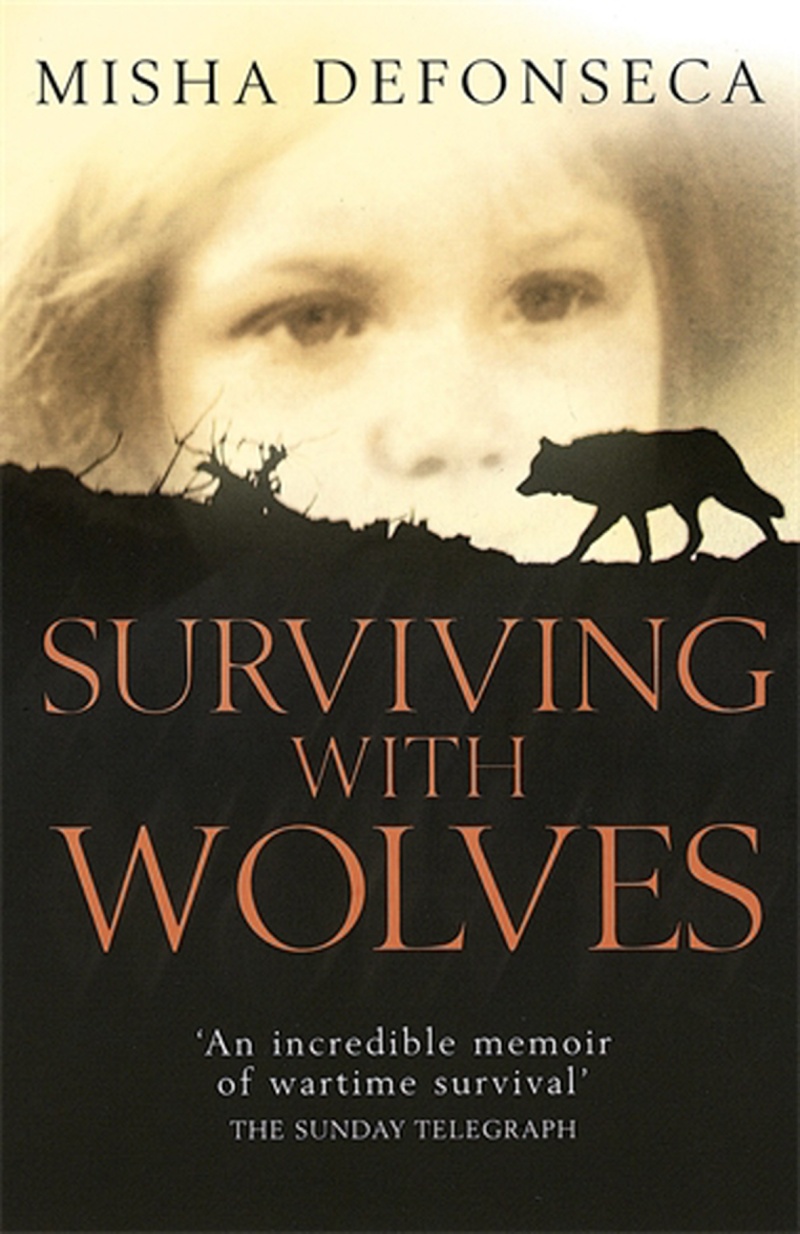
Surviving with wolves - Misha Defonseca

❖ No comments:

Title: Surviving with Wolves
Original Title: Survivre avec les loups (French)
Translator: Sue Rose
Author: Anita Shreve
Publisher: Piaktus books
Release date: 1997 (English transalation: 2005)
Pages: 231
 

* You keep going first to find something to eat and then because you always believe that, beyond that tree or over that high slope, you'll find a village, or people or a road sign pointing you in the right direction.*
_________________________________ 

Misha was only seven when the Nazis took her Jewish parents away from her in Brussels. No one told her why her parents were no longer with her; only that they had gone East. So one day, equipped with just a tiny compass, the little firl set out East to find them. Alone and on foot, Misha crossed Belgium, Germany, Poland and the Ukraine.
Surviving with wolves is Misha's extraordinary and poignant story - of how a young girl witnessed the appalling cruelties of war, and for whom the animals of the forest proved safer than humans. It is a book that will never be forgotten by anyone who reads it.


“At one lecture, a woman said to me, ‘You’re not a holocaust survivor. You didn’t live in the camps.’ Hers was just one voice among others. It shouldn’t have upset me as it did, but I was annoyed with myself for telling the world a story that wasn’t universally accepted, just because it wasn’t like everyone else’s. I was different, as always… ” Surviving with wolves is indeed unique, a story different from any other one you might have read. It takes place during the war and the reader sees through Jewish eyes. Until then, you will tell me that there is nothing unusual about it, and you are right. What makes this book so extraordinary how its story actually unfolds and how the different events that occur are told.
Misha lives in Brussels with her parents and even though they are rather poor, she is happy. But she is Jewish and her life changes forever when her parents are taken away by Nazis. Misha is saved and placed in a Belgian family who will take care of her. As she is only seven, she does not fully understand what is happening. She knows that she must not say that she is Jewish; she knows that the Nazis are dangerous; she knows that her parents are in the East. Nobody explained anything else to her. So one day, she sets off towards the East to find them and starts an unimaginable journey through Europe in war.
The story of the journey itself is wonderful. We follow the little girl who knows nothing about war in her adventure. She is innocent but clever and very brave. From the very beginning, we see how she can survive in hostile environment, with people fighting around her and the whole world collapsing. Because of this traumatic period, nobody tries to stop her; it is not usual to see poor and filthy children on their own, and Misha does not trust people. She steals food from the farms or eats from carcasses rather than begging or asking for help. She sleeps in the forest rather that hideing in deserted buildings. This is how, on her long way trough Belgium, Germany, Poland, Russia and the Ukraine, she meets wolves with whom she develops a wonderful relationship.
This relationship is incredible at first, but yet as the story goes on we understand it better. The descriptions of the majestic animals are poignant and we clearly see why the little girl trusts them rather than humans: they don’t have guns, they are not deliberately cruel to one another, they have clear rules and they can be trusted… Unlike human beings or at least unlike the human beings Misha has met.
The scenes with nature are cleverly mixed with war scenes. As Misha does not trust humans, she does not seek social contact but inevitably she will see some of the horrors of the war. An interesting aspect is that, by travelling, we see how different people react to the war. The reader is given an insight into Polish guerrillas’ fights, Jews’ persecution, German soldiers’ methods, Russian civilians’ hope and prisoner camps…
These are described with accurate details of what the little girl felt when she actually lived the scene and mixed with explanations given by Misha years later, when she writes about her adventure. Telling this story with two perspectives was a sensible choice: we understand the little girl experience, her innocence and how traumatic everything was for someone who did not understand at all the gravity of what was happening; at the same time, we have more factual explanation to help us understand how Misha’s personal story is linked to the rest of the events.
One of the main controversies that arose with the publication of this book regarded the truth of the story. Even if Misha first presented it as real, it turned out that she had actually made it up: she was not Jewish and she did not travel all the way through Europe, living with wolves, to find her parents. This revelation should however not lessen the beauty of the story. Misha has survived the war and her need to tell a story that differs from the one she actually lived shows how she tries to heal from this traumatic experience.


Surviving with wolves is therefore a book that is worth reading, especially for people who like animals and are interested in war stories. However, anybody can find it interesting, as it is extremely varied and well written..

 
The pilot's wife has been adapted into a film. 


Shadow - Michael Morpurgo

❖ 2 comments:

Title: Shadow
Author: Michael Morpurgo
Publisher: Harper Collins (Children's Books)
Release date: 2010
Pages: 288
 

*Anyway, she just appeared, suddenly, from out of nowhere. She was just there, walking alongside us for a while, then running on ahead, as if she was leading us, as if she knew where she was going.*
_________________________________ 

Never has Aman needed a friend more than when a Springer Spaniel appears in the mouth of his Afghan cave. The dog becomes a constant companion, a shadow, and that's what Aman decides to call her. 
But life becomes more dangerous by the moment. Eventually, Aman and Shadow find the courage to leave. But how far can Shadow lead them? And in this terrifying new world, is anywhere really safe?


Shadow is based on real facts. It is a great book for children, as it is light but examines serious themes: the war in Afghanistan and the lives of the refugees who have been able to flee. The cover is perfect: the lovely springer spaniel catches the eye but in the background we can see the dangerous world Aman lived in.
The story is told from three different points of view, which makes it interesting and unusual for children. The main storyline is about how Shadow helps Aman and his mother on their risky journey out of Afghanistan. However we discover this amazing story months after it happened, when Aman tells it to his best friend's grandfather.
So Aman tells us about the past while Matt and his grandfather describe the present. Because even if Aman and his mother managed to escape the turmoil of their war-torn country they are not safe. After six years in England they are considered as illegal refugees and they are kept in a centre, waiting to be sent back to where they come from. But Matt doesn't want to give up and with his grandfather, they prepare a plan to save Aman and his mother.
The fact that most of the story is told by young characters adds to its depth and is ideal for the audience the book is aimed at. The events are described in an innocent and simple way which probably moves young readers more than an omniscient narrator would have; the characters are easy to understand and use the words and way of speaking children are used to. Moreover, Aman and Matt could be their friends.
Despite the apparent lightness of the book, the story is moving and presents themes that are important in today's world. It is a good introduction to the war in Afghanistan and the refugees, whom children might meet in their real lives. And fortunately we have a "happy ending" - which seems a little bit unrealistic to older readers - as it is a children's book.

All children who love animals will probably enjoy this book. It is ideal for readers around 8 or 9 years old because even if it seems light, younger children will probably not fully understand the problems with the refugees. I personally started reading it as a bedtime story to an 8-year-old girl - so that normally means one chapter each night - but ended up borrowing the book the first evening and reading it to the end.


War Horse - Michael Morpurgo

❖ No comments:

Title: War Horse
Author: Michael Morpurgo
Publisher: Egmont
Release date: 1982
Pages: 288
 

*Some in the village, only a very few now and fewer as each year goes by, remember Joey as he was. His story is written so that neither he nor those who knew him, nor the way they lived and died in, will be forgotten.*
_________________________________ 

'I saw the grey soldiers ahead of us raise their rifles and heard the death rattle of a machine gun...' A powerful story if the truest of friendships in the worst of wars from the award-winning master storytelle Michael Morpurgo.


Love, friendship and courage... These three words describe perfectly War horse, the moving story of the horse Joey and his companion Albert through the Great War.

Michael Morpurgo takes the reader to the English countryside, where young colt Joey is sold to a farmer. The farmer's son Albert finds in love with the horse straightaway and as time goes by, their relationship evolves into a true friendship. Although Joey is not a farm horse he successfully learns how to pull a cart and plough to earn his keep and spends all the rest of his time with Albert.
However as war is declared, their destiny is about to change forever. Joey is sold to the army and has to go to the front while Albert, too young to join in as a soldier, stays on the farm. Before they part, he promises his horse that they will meet again.
The story goes on, describing the horror of a war where humans and animals are used like machines and do not understand what they are fighting for anymore. We discover the front line, the battles, the cavalry, the trenches and the artillery troops. Michael Morpurgo portrays extremely realistic scenes of the war which are ideal give children a basic knowledge of History. There is just the right level of violence to make them understand the horror and consequences of the war on people and animals.
We rapidly grow attached to that extraordinary brave horse. Joey, who is as you will have understood, the narrator and main character of the story, goes from farm horse to cavalry horse, war prisoner, ambulance horse and artillery horse. During his fight for survival he meets various people who will change his life and we discover little by little the lives of each one of them as well as the consequences the war had on them. Captain Nicholls, Emily and her grandfather, old Friedrich… so many people who fall for that heroic horse who brings a little light in their cold and dark daily life. But Joey will never forget his first and dearest friend Albert.
Michael Morpurgo skilfully mixes scenes of friendship and love with moments of fear and horror. This moving story is perfect for children who like animals and gives a good overview of the implications of World War I. Older reader might enjoy the adventure as well, especially if they want to know more about how horses were used during that war.
_________________________________


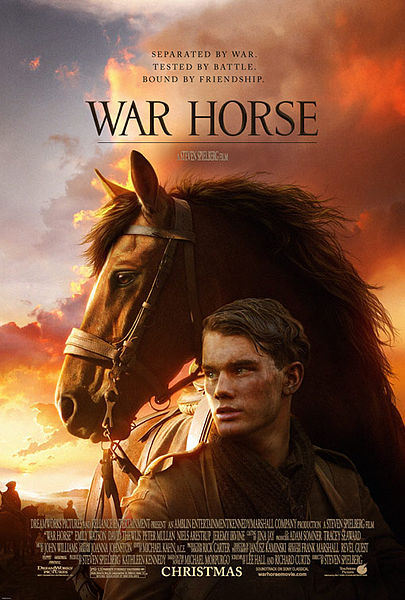
War Horse has been adapted into a film. 
See my film review and comparison with the book here.


Design by Laraemilie